Introduction: Why Business Transformation in Egypt & Saudi Arabia Is Failing
Business transformation in Egypt and Saudi Arabia is accelerating in 2026.
Organizations are investing in leadership development, executive coaching, and commercial transformation initiatives.
Yet results remain inconsistent.
The issue is not capability.
It is where transformation is being applied—and where it is being avoided.
Most transformation efforts focus on improving activity.
Few address decision-making at leadership level under real pressure.
Business Transformation in Egypt: Efficiency Under Pressure
In Egypt, business transformation is no longer driven by expansion—it is driven by survival and efficiency.
Organizations are under pressure to:
- Improve commercial effectiveness
- Expand into export markets
- Generate hard currency revenue
However:
Many companies attempting business transformation in Egypt fail because they apply local sales logic to international markets.
This creates a gap between effort and results.
Teams are active, but not effective.
Strategies exist, but do not translate into revenue growth.
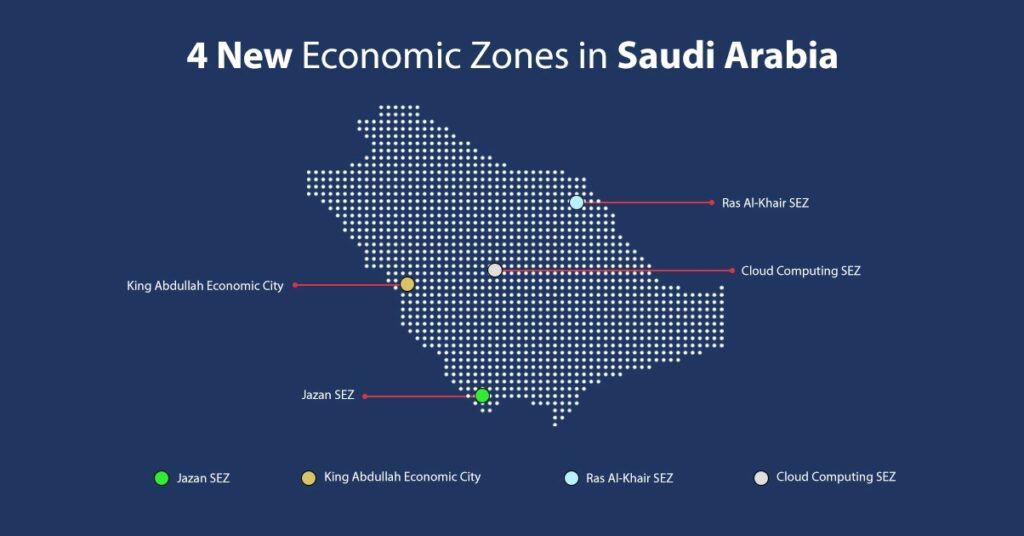
In Saudi Arabia, business transformation is driven by growth—but constrained by structure.
Organizations, especially family businesses and large enterprises, are facing:
- Leadership transitions
- Rapid expansion
- Increasing complexity
The Real Constraint: Leadership Decision-Making Under Pressure
Across both Egypt and Saudi Arabia, the same pattern appears:
Organizations increase:
- Training programs
- Strategic initiatives
- Reporting structures
But outcomes do not improve proportionally.
The real constraint is decision-making clarity at executive level.
This explains why:
- Leadership teams feel overloaded
- Growth becomes inconsistent
- Execution lacks alignment
Executives do not lack frameworks.
They lack space to think clearly when decisions carry real consequences.
The challenge is not ambition.
The challenge is that organizational structure and leadership alignment are not evolving at the same pace as growth.
This leads to:
- Slower decision-making
- Misalignment across leadership teams
- Reduced commercial effectiveness
A core requirement for business transformation in Saudi Arabia is stronger governance and leadership clarity.
The Real Constraint: Leadership Decision-Making Under Pressure
Across both Egypt and Saudi Arabia, the same pattern appears:
Organizations increase:
- Training programs
- Strategic initiatives
- Reporting structures
But outcomes do not improve proportionally.
The real constraint is decision-making clarity at executive level.
This explains why:
- Leadership teams feel overloaded
- Growth becomes inconsistent
- Execution lacks alignment
Executives do not lack frameworks.
They lack space to think clearly when decisions carry real consequences.
Why Most Business Transformation Efforts Fail
Transformation Without the Decision Owner
If business transformation initiatives do not involve the executive carrying the consequence: They become operational Not strategic Delegated transformation creates activity—not results.
Over-Reliance on Training and Frameworks
Many organizations rely on: Leadership development programs Sales training Consulting frameworks However: Structure without clarity increases complexity, not performance.
Misdiagnosing Commercial Problems
In many cases, companies assume: The issue is team capability The solution is training But in reality: Commercial underperformance is often a result of unclear leadership decisions—not lack of skills.
A Strategic Approach to Business Transformation in 2026
A more effective approach to business transformation in Egypt and Saudi Arabia starts with different questions:
- What decision is currently unclear at leadership level?
- Where is effort increasing without measurable growth?
- Which conversations are being avoided due to risk or consequence?
Transformation does not start with implementation.
It starts with identifying what leadership is not confronting.
Executive Coaching and Leadership Development as Entry Points
Effective business transformation requires structured entry—not open access.
This is where:
- Executive coaching in Egypt and Saudi Arabia
- Leadership development programs in KSA
play a role—not as standalone solutions, but as entry points into deeper transformation.
These approaches:
- Create clarity
- Expose decision gaps
- Align leadership thinking
But only when applied at the right level (decision owners).

How MAS & Partners Supports Business Transformation
At MAS & Partners, business transformation is approached as:
- Executive-level intervention
- Leadership alignment under pressure
- Commercial effectiveness improvement
Not as:
- Generic consulting
- Mass training
- Framework delivery
Through a combination of executive coaching and high-impact leadership engagement, organizations achieve:
- Clearer decisions
- Stronger alignment
- Measurable growth outcomes
This reflects a focused positioning:
Working with executives to translate leadership effort into commercial results and sustainable growth.
Corporate Strategy
MAS & Partners works with executives and leadership teams when direction is unclear, pressure is high, and decisions cannot be delayed. We engage where strategic choices “corporate strategy” directly impact growth, performance, and long-term positioning.
Capability Development
MAS & Partners supports leadership development while building execution capabilities that enable organizations to deliver consistent performance.
Investment Readiness and Growth Structuring
We engage where capital decisions carry long-term consequences—not just short-term funding goals.